Why Crawl Space Water Damage Is Different
Crawl spaces are dark, low-airflow, and built directly on soil. Water that pools there does not evaporate. It sits, it soaks, and it breeds.
- Wood joists absorb moisture and lose load-bearing strength
- Fiberglass insulation holds water like a sponge and falls from the subfloor
- Vapor barriers trap moisture against framing if installed wrong
- Mold can colonize untreated wood in 24 to 48 hours
- Humidity rises into the home through the stack effect
- Steel supports and HVAC ductwork corrode in sustained humidity
- Electrical wiring and junction boxes degrade when chronically wet
Roughly 40 to 50 percent of the air you breathe upstairs originated in the crawl space. That is why this is not a problem you can wait out.
The 7-Step Lake Stonebridge Water Restoration Crawl Space Recovery Process
Here is the exact sequence our Lake Stonebridge crews follow on every job:
- Emergency assessment. We inspect access points, water source, and IICRC category (1 clean, 2 gray, 3 black). Sewage or groundwater is automatically Category 3.
- Source control. Burst pipe, failed sump pump, foundation seepage, or storm intrusion gets stopped before extraction begins.
- Water extraction. Truck-mounted vacuums and crawl space pumps pull standing water within hours, not days.
- Debris and material removal. Wet insulation, ruined vapor barrier, and contaminated soil layers come out.
- Structural drying. Commercial dehumidifiers and air movers run 3 to 5 days until moisture meters read normal.
- Antimicrobial treatment. EPA-registered products applied to joists, subfloor, and piers.
- Reinstallation. New vapor barrier, insulation, and optional encapsulation depending on scope.
Mistakes That Make Crawl Space Damage Worse
- Running a household dehumidifier and assuming it is enough
- Leaving wet insulation in place to dry on its own
- Sealing the crawl space before structural drying is complete
- Trusting a handyman without IICRC water damage certification
- Waiting for insurance approval before stopping the water source
- Skipping antimicrobial treatment after Category 2 or 3 water
- Spraying bleach on wood framing (it does not kill mold at the root and damages the wood)
- Reinstalling fresh insulation against framing that still reads above 18 percent moisture
What You Can Do Before We Arrive
- Shut off the water main if the source is plumbing
- Cut power to the crawl space at the breaker if outlets are wet
- Keep kids and pets out of affected rooms
- Take photos and video for your insurance claim
- Do not enter the crawl space yourself if sewage is involved
- Save receipts for any emergency purchases
- Open interior doors to equalize humidity across the home
- Move stored boxes off the floor in rooms directly above the crawl
- Call Lake Stonebridge Water Restoration so we can start extraction within hours
Crawl Space Water Damage Cost in Lake Stonebridge
Pricing depends on water category, square footage, and how much material needs replacement. Realistic ranges:
- Water extraction only: $500 to $1,500
- Extraction plus drying: $1,500 to $4,000
- Full restoration with insulation and vapor barrier: $3,500 to $8,000
- Category 3 sewage cleanup: $4,000 to $12,000
- Full encapsulation upgrade: $5,000 to $15,000
Most homeowners insurance covers sudden and accidental damage like burst pipes. Groundwater and long-term seepage are usually excluded. For a deeper breakdown, our water damage restoration cost guide walks through the line items.
Warning Signs Your Crawl Space Is Wet Right Now
You do not need to crawl under the house to know something is off. Watch for:
- Musty odor in closets, bathrooms, or low rooms
- Cupping or buckling hardwood floors
- Soft spots in flooring near exterior walls
- Higher than normal humidity readings indoors (over 60%)
- Increased allergy or asthma symptoms in the home
- Visible mold on baseboards or lower drywall
- Cold floors in winter from soaked insulation
- Pest activity, especially termites or carpenter ants
- Rust streaks on HVAC vents or registers near the floor
- Condensation forming on toilet tanks and metal fixtures
- Sagging spots in the subfloor visible from the basement or finished rooms above
What Drying Actually Looks Like
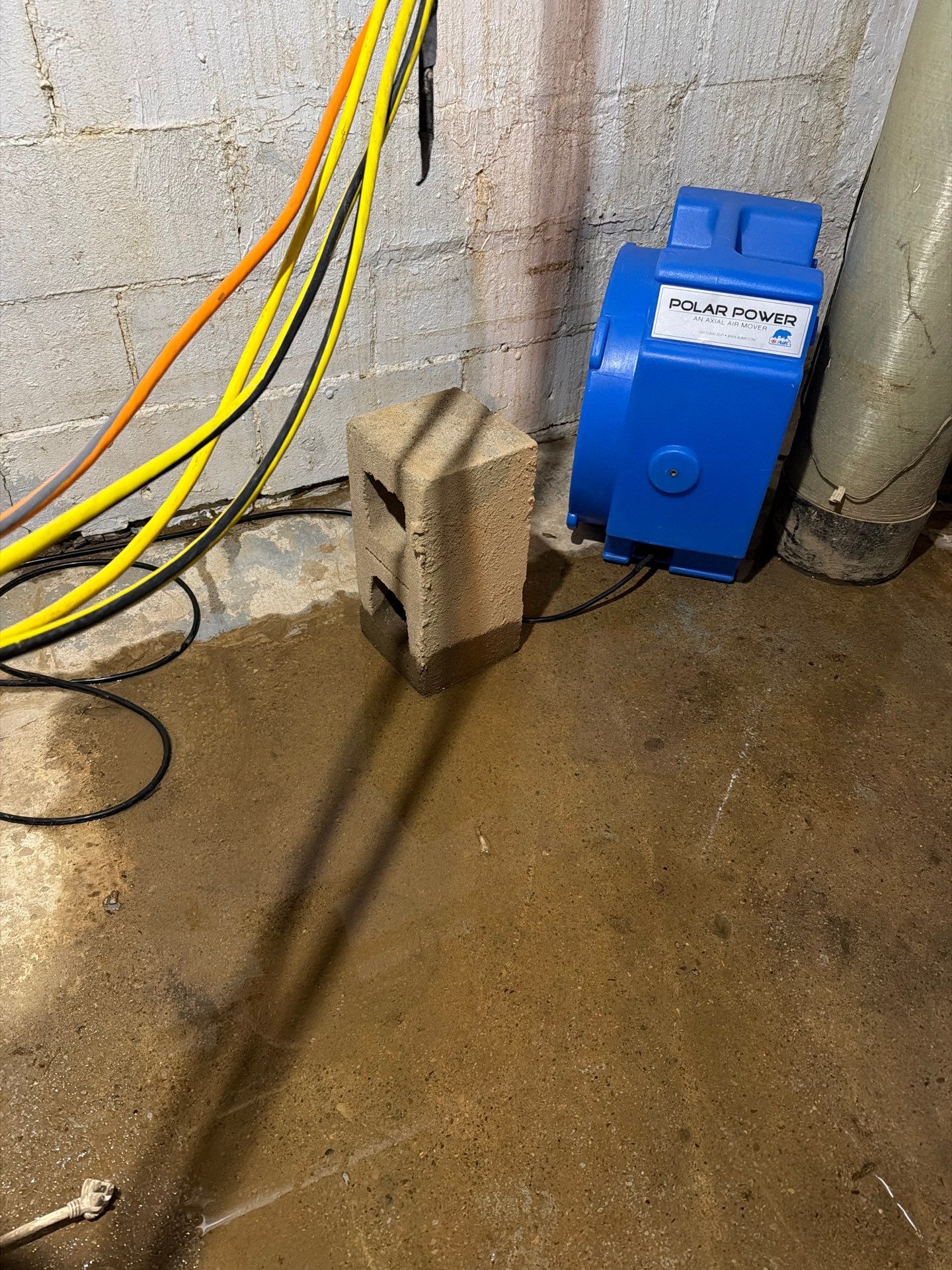
Drying a crawl space is not the same as drying a basement. The space is tight, the airflow is restricted, and the materials hold moisture longer. Here is what professional equipment placement involves:
- LGR (low grain refrigerant) dehumidifiers sized to the cubic footage
- Axial air movers positioned to create directional airflow
- Daily moisture mapping with penetrating and non-penetrating meters
- Containment with poly sheeting to isolate the work zone
- HEPA air scrubbers if mold is present or suspected
- Temperature monitoring, since drying slows below 60 degrees
- Power load planning so generators or dedicated circuits keep equipment running
Drying typically takes 3 to 5 days for clean water and 5 to 7 days for contaminated scenarios. Anyone promising same-day completion is cutting corners.
Moisture Targets We Look For
- Wood framing under 16 percent moisture content
- Subfloor decking under 14 percent
- Relative humidity below 55 percent inside the containment
- Surface temperature within 5 degrees of ambient to avoid condensation
Why Lake Stonebridge Homeowners Call Lake Stonebridge Water Restoration
- Local crews dispatched 24/7 across Central Indiana and surrounding service areas
- IICRC certified technicians, not subcontractors
- Direct insurance billing and documentation support
- Honest scope. If drying alone will solve it, we will not push encapsulation
- Written drying logs with daily moisture readings
- BBB A+ rating since founding in 2018
- Same-day response on emergency calls placed before 6 PM
- Transparent written estimates before any demolition begins
For broader water issues throughout the home, our water damage restoration service page covers the full scope of what we handle.
Preventing the Next Incident
Once your crawl space is dry and restored, a few habits keep it that way. We recommend Lake Stonebridge homeowners build a short seasonal checklist.
- Inspect the vapor barrier every spring for tears, gaps, or displacement
- Test the sump pump quarterly by pouring a bucket of water into the pit
- Replace the sump pump battery backup every 3 to 5 years
- Extend downspouts at least 6 feet from the foundation
- Regrade soil so it slopes away from the house at a quarter inch per foot
- Install a wireless humidity sensor and check readings monthly
- Schedule a professional crawl space inspection every 2 years
- Insulate exposed supply lines before the first hard freeze
These steps cost very little compared to a second restoration bill. Most failures we see are repeat events from homes that never addressed the underlying cause.
Common Causes We See in Lake Stonebridge Homes
- Burst or frozen supply lines under the floor
- Sump pump failure during heavy rain
- Foundation cracks letting groundwater seep through
- Sewer line breaks (Category 3, requires full protocol)
- HVAC condensate line leaks running for months unnoticed
- Poor exterior grading directing rainwater toward the foundation
- Failed gutters and downspouts dumping water at the footing
- Water heater pan overflow when units are installed above the crawl
- Washing machine supply line ruptures on the first floor
- Cracked or missing crawl space vent covers letting rain blow in
If you are dealing with a frozen pipe scenario, our team also covers frozen pipe burst repair in detail. For sump-related flooding, see our sump pump failure guide.